.jpg)
Weekly Newsletter
Freedom Calls: 23/3/26, Who is going to blink first in the Gulf?
by
From the Team at Freedom Asset Management
March 23, 2026
8 Minutes

Freedom Calls: 23/3/26, "Who is going to blink first in the Gulf?"
From the team at Freedom Asset Management
It felt like an episode of Downton Abbey last week, as we partook in our own "London season", which involved a choral performance at Smith Square Hall, being invited for dinner at a historic Mayfair club and a top-hat fitting at Lock & Co for Royal Ascot later in the year.

Pictured: (L) The Parliament Choir at Smith Square Hall, and (R) Alan with Sandrine
Above, Freedom's very own Alan Walker, singing for the Parliament Choir, was front and centre for the performance of Bach's St Matthew Passion, sung in German, proving Freedom's talents extend beyond asset management, at least occasionally.
Where next for Iran and the Gulf?
I landed back in the UAE yesterday, courtesy of the excellent pilots at Emirates, staying for the week and looking forward to seeing a number of our clients, friends of the firm and of course our team. It feels good to be back and the weather did not disappoint. The local neighbours, pictured below, seemed serenely content.

Last week in London, I caught up with my sources close to the British and Americans to listen to the current thinking. It is pretty clear that Iran was ready for this war, which it now also seems was inevitable at some point. There is some evidence that Russia, in addition to providing intelligence, is resupplying Iran with drones via a third country.
The reality of where we are is that Iran remains decapitated (like the headless cockroach), heavily wounded, but undefeated. It has descended into militia fighting on scripts that were probably written well before the war started. The missile and drone attacks continue against the UAE, Qatar and Saudi. For the Americans it is difficult to know who to "deal" with, given the Israelis keep taking out the next in command. But the Americans still believe Iran at some point will want a deal.
The Gulf countries (Saudi, Kuwait, Qatar, Bahrain and the UAE) were not expecting to be the target of Iran's ire, but Iran has played its hand, and the Gulf countries will not forget this lightly, (or ever). Iranian diplomats have been sent home by Qatar and Saudi - and it has brought the Gulf closer to the US. The US has pulled in defensive missiles and launchers from South Korea and Japan to replenish the local supplies. The UAE air defences remain incredibly effective, as I witnessed yesterday and through the night.
It seems the rest of the world (i.e. the UK, Europe, much of Asia and the US Democrats) do not have the stomach to take on Iran in the Strait of Hormuz, and so are cowering in the background hoping it will all "go away". There is an embarrassed silence from all those people who were taunting Trump to support the democracy movement in Iran. Trump has few friends outside of Tel Aviv, and now the Gulf, and many media outlets seem to enjoy seeing him struggle. If you are Trump, I get it, you are fed up with these spineless countries in Europe and beyond - maybe it is time to pack up, call it a win, and take your boys and your kit home.
But that would be wrong. Iran is the regional bully and the mafia boss who effectively controls the Strait of Hormuz and finances several terrorist groups in the region. There is never a good time to take on the mafia - it takes courage, people will get hurt, but for society the other side is a much better place. The alternative is a tax on the global economy to say nothing of its direct and dire human impact on Iranians.
Last week we laid out 2 scenarios - I think they still hold true:
Trump/Israel "finishes the job", and
He doesn't…. but declares "victory" and leaves the rest of the world to deal with the mess, including higher energy costs, inflation etc.
As a reminder the winners and losers under these scenarios are pretty much the opposite of each other:
Scenario 1 - Trump/Israel "finishes the job":
Winners: the Gulf countries, Asia including China, Japan, Europe - pretty much everyone, even Iran eventually, as energy costs fall and stay low, but Iran will be producing much more energy and able to sell it on international markets
Loser: Russia
For most people that is a pretty good set of outcomes.
Scenario 2: He doesn't… but declares "victory":
Winners: Iran, Russia and possibly the US (it is large producer of energy) Losers: the ability of the Gulf countries to diversify their economies, Asia including China, Japan, Europe because of higher energy costs
What does "finishing the job" mean?
According to Axios, which is being widely reported, the US negotiating position looks something like this (1) an agreed cessation of hostilities, (2) an end to the nuclear programme, including decommissioning the 3 large nuclear facilities at Natanz, Isfahan and Fordow, (3) reopening of the Strait of Hormuz, (4) no missile programme for 5 years and (5) no financing for proxies like Hezbollah (Lebanon), the Houthis (Yemen) and Hamas (Gaza). I think many people would expect to add to that list also "a more internationally friendly regime".
Iran has already rejected these terms. Iran is seeking reparations and a guarantee that war will not resume. Ironically, it was the last Iran deal under the Democrats that gave the Iranian regime the money to fund their massive missile and nuclear programmes that the Americans and the Israelis are targeting now - so I don't see how Trump negotiators are going to be offering a large cash pile in return for ending this war.
Can it be done?
Trump's Achilles heel is the domestic audience back home, the mid-terms (in November) and a largely hostile media. He has been smart not to be bringing back (many) body bags, but the big question is whether he can complete his objectives without boots on the ground. So far he has been remarkably effective.
Iran's Achilles heel is the same thing - time. Iran has no air defences, no air force and no navy. Iran must be running out of missile capabilities; it may soon have no power plants. Any rational regime would see that they will cannot win from here and would be seeking some face saving peace agreement, which is still possible.
What could change or surprise?
I heard an angle that if the Gulf countries think Trump is in danger of walking away, they may try and reach bilateral deals with Iran. That would not be a great outcome. It would also damage Israel and undermine the American's role in the region. Some Gulf countries (e.g. Saudi and the UAE) also have lines into Russia, which could change the dynamic. Russia is easily bought and would welcome the money and the influence right now.
Iran surprised the world with its audacious attempt to send long range ballistic missiles to Diego Garcia. Although the missiles failed to reach their target, it demonstrated that if Diego Garcia is within reach, then so is Europe. That may help focus minds in Whitehall and Brussels. The recent arrival of a British attack submarine outside the Strait of Hormuz might mark a change in tone from Whitehall.
Performance - Iran is still making its presence felt
The least likely headline last week was the 10% fall in the Gold price, which you would not normally expect during a war, but in retrospect shows that the Gold price was being supported by (1) speculative flows, and (2) the belief that interest rates would fall in 2026. Last week, the Fed, the Bank of England and the ECB all decided to leave interest rates on hold pending the direction of inflation data.
Perhaps the more surprising fall was with the gold miners (GDX), which are now down -32% from their peak this year. This was the consensus trade in the City at the beginning of the year, which we did not take part in, but it does start to look very interesting at these levels. There has also been a meaningful correction in Asia and Japan, but it is worth remembering these markets had a strong start to the year.
(For performance disclaimers, please see foot of email.)
If we compare our fund performance numbers above to the S&P500, which is now down -4.95% year to date, it shows the fund strategies are performing relatively well - and in the case of OGF particularly well.
We stay very close to developments and as soon as there is meaningful change in the outlook, we will act. The performance danger now is possibly to be under allocated to risk, if this war comes to a close quickly. We don't think we are there yet.
Our articles this week:
10,000 Days' Cody Willard writes for us on "The best set-up yet for revolutionary technology investing"
Charles Harris gives us his latest report in: "March Defence update: $16bn of defence sales approved to the Gulf"
Manus AI Webinar
Thank you to all who joined the Manus AI webinar last week hosted by Charles and Bryce. There was a recording which is being prepared and will be available in the next couple of days. In the meantime, if you would like to try Manus AI, here is the referral link for Bryce which will give you 500 free Manus credits:
I am in Abu Dhabi and Dubai this week - and Guernsey next week. In the meantime, wherever you are, please make this week another safe one!
Adrian
Co-Founder // Freedom Asset Management
Guernsey // Abu Dhabi // Hong Kong
M: +44 7781 40 1111 // M: +971 585 050 111 // M: +852 5205 5855
—————————————————————————
“The best set-up yet for revolutionary technology investing", 23/3/26
By 10,000 Days' Cody Willard and Bryce Smith - Advisers to US Technology VIP Fund
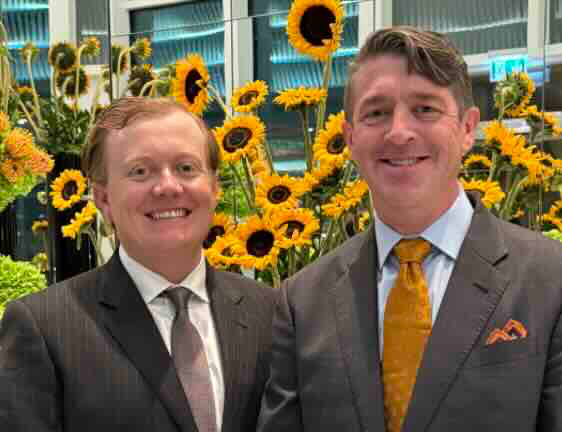
I’ve been Revolution Investing for nearly 30 years now and this is perhaps the single best long-term set up I’ve ever seen for my approach. That is, I see three pillars in the current set up upon which the next great wealth creation cycle of Revolutionary Technology will be built. And one obvious worry that we will address too.
The first leg of the prosperity generating stool I’m looking at is the economic set up here. We’re about to see a trillion dollars of spending on AI datacenter cap ex…this year. Just one year here. In the US alone, the hyperscalers and other, smaller AI datacenter builders will spend more than $800 billion in 2026.
To put this in perspective, recall that the extraordinary TARP bailout from the Great Financial Crisis in 2008 was, yes, $800 billion. From 2009-2015, I wrote about how The Smartphone Revolution and The Cloud Revolution would combine with all that free money that the government and Fed had been pumping into the system with bailouts and 0% interest rates and other free money policies would create a Bubble-Blowing Bull Market and send us into another Echo Techo Bubble.
Well, this time around, we not only have a Federal Reserve that’s trying to take rates not only below natural market levels, but, as they are wont to do, trying to take them as low as possible in months and years to come.
But so much more importantly, since it’s private investment and profit-seeking motive with incredible ROI that’s driving the more than trillion dollars of spending and directly creating demand for not just Nvidia chips and other AI datacenter tech products but also plumbing, pipes, tractors, tires, etc, it’s a much healthier stimulus that this spending will perpetuate through the economy. I don’t think most analysts, economists and investors have any clue just how impactful this accelerating cap ex cycle off of an already historic rate will be on the economy and the stock market.
Obviously, the big concern with the economy is the War with Iran. The impact on prices from gasoline to shipping to food along with the fog that comes with any war and the potential for more escalation is worrisome and problematic, especially for the near-term.
That said, war can be economically stimulative, and more importantly, much of this issue has already likely been priced into the markets as the S&P 500 P/E ratio has already dropped more than 20% from its recent highs even as the index itself is only down 7% from its recent highs.
Why would that be? Oh, because the earnings part of the P/E ratio have been going up, in large part because of the trillion dollars being spent on AI datacenter cap ex. Meanwhile, the average tech stock is down more than 30% and many of the [formerly] highest flying speculative sectors like quantum and nuclear (which we did not invest in) are down 50-80% or more.
That said, I don’t want to whistle past what is obviously a major geopolitical and therefore major economic event that’s currently showing no signs of ending. Furthermore, my friends in the UAE, which is funneling and helping generate all these trillions of dollars of economic activity, including investing in Revolutionary Technologies, are under attack and that’s also worrisome if it continues long-term. We are mostly invested in the safest, most technologically sophisticated platform companies on the planet and, with more cash on the sidelines than most any of our competition that we are now starting to put back to work, we are well positioned to navigate any further downturns in the economy and/or the markets from this issue.
The good news is that it’s probably primarily because of the war with Iran that we are seeing so many incredible valuation pitches right here right now. Which is indeed the second pillar of my bullish outlook here: I’ve never had the opportunity to buy the best Revolutionary Tech stocks at the kind of valuations we are seeing right now. We’ve been getting to buy Meta and ZScaler at below market multiples. We got to buy names like ARM and CRCL while they were down nearly 50% or more from their recent highs while everybody else was panicking about their near-term stock action even as the long-term fundamentals are looking stronger than ever.
Which leads me to my third pillar to explain why I think this is probably one of the greatest times to be a Revolution Investor in my lifetime: The coming Inflection Points.
The AI Revolution is still in its infancy — the dial-up Internet phase of The AI Revolution, as I like to call it. What we’re doing with AI today will seem as archaic in three years as dialing into AOL (if anybody still did such a thing) would be today. Most corporations and small businesses and governments are rightly slow moving and have hardly started using this archaic version of AI. The impact on efficiency, productivity, profitability and growth will be unprecedented. It’s a limited world view to think that people won’t be creating millions of new businesses built around and on AI. Artists and philosophers will be unleashed like never before. Accountants and attorneys and analysts will be 5-10x more productive in everything they do and they’ll have more time to provide more service to more people more inexpensively. The hockey stick of accelerating efficiency, productivity, profitability and growth in coming years will create hockey stick earnings growth for the companies that own the platforms underpinning it all.
Likewise, The Robotics Revolution is just about to go mainstream and it will have the same kind of impact on blue collar jobs and companies that run labor-intensive businesses to enjoy similarly unprecedented levels of efficiency, productivity, profitability and growth.
And then there’s the hockey stick of The Space Revolution that will create all kinds of new markets, applications, services and economy.
With the world set to double the total sum of all the wealth that’s been created in the history of humankind over the next 25 years (assuming only 2.5% annual gross world product growth, which is likely way too small of an estimate given all of the above analysis), the long-term outlook for Revolution Investing is stronger than ever.
With the economic underpinnings of unprecedented tech spending, accelerating adoption of AI, Robotics and Space in the years ahead; with valuations as historically attractive as they currently are; and with the hockey stick inflection points for so many of our companies coming so soon… well, for the first time since I launched my fund business more than seven years ago, I’ve literally been setting up calls with each of our existing investors to tell them that now is the time to top off.
To the moon!
Cody Willard
—————————————
"March Defence update: $16bn of defence sales approved to the Gulf", 23/3/26
By Charles Harris, Investment Analyst, Abu Dhabi office
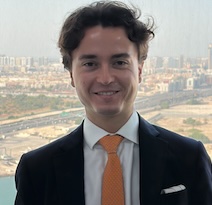
Following three weeks of unprecedented air attacks, the Gulf states are now being pushed into a new era of defence procurement. This conflict represents a fundamental structural shift in regional warfare in four key ways: (1) Scale, (2) Direct Conflict, (3) Collapse of Neutrality, and (4) Civilian Targets.
- Gulf states have never faced this level of aggression from Iran – as at day 20, 4,000+ projectiles had been fired at GCC states (Figure 1 below).
- Iran has previously operated through proxies, maintaining plausible deniability. Attacks are now coming directly from Iranian soil.
- Oman and Qatar – historically mediators between Tehran and the rest of the world - have now been targeted. Iran no longer respects neutrality and has pushed the GCC to seek greater military unity.
Energy & Economic sites are now targets of Iranian retaliation, which will have significant impacts on the outside perception of safety and stability in the region long after the conflict comes to an end.

Figure 1- GCC Strike Monitor (Day 20)
Procurement Response
The severity of the situation has not gone unnoticed by nation states and has catalysed a multi-billion-dollar shift to Counter-Unmanned Aerial vehicle Systems (C-UAS).
Last week the US Department of State approved the foreign military sales to the UAE, Kuwait and Jordan which includes air-to-air missiles, precision guided munitions, missile defence radar and C-UAS.
The UAE represented the bulk of the order requests from the US, which included the following:
- AMRAAMs (Advanced Medium Range Air-to-Air Missiles) and related equipment. The UAE has requested to purchase AIM-120C-7 or AIM-120C-8 (x400) and AIM-120C-8 AMRAAM guidance sections (x8). These are combat proven, GPS-guided missiles with a range of 160+ km likely to be operated from UAE Air Force F-16s.
The sale was approved on 19th March - RTX is the primary contractor – approx. $1.2bn.

Figure 2 - AMRAAM AIM-120
- F-16 munition upgrades: 1,500 GBU-39/B Small Diameter Bombs, 900 KMU-556 Joint Direct Attack Munition guidance kits, 300 KMU-557 JDAM guidance sets plus related equipment.
The sale was approved on 19th March – Lockheed Martin is the primary contractor – approx. $644m.
- THAAD systems and related equipment: Long-range discrimination radar integrated with Terminal High Altitude Area Defence (THAAD) (x1), Sentinel A4 uplinkers (x12), THAAD C3 Fire Control and Communications (TFCC) tactical operations stations (x2), THAAD C3 TFCC launch and control stations (x2). THAAD is a ground based missile defence systems used to intercept short to medium range ballistic missiles, earlier versions were used to counter Houthi attacks in the UAE in January 2022.
The sale was approved on 19th March – Lockheed Martin is the primary contractor – approx. $4.5bn.
- Fixed Site- Low, Slow, Small Unmanned Aircraft Integrated Defeat System (FS-LIDS) and related equipment. Fixed Site- Low, Slow, Small Unmanned Aircraft Integrated Defeat System (FS-LIDS) System of Systems (x10), Coyote Block 2 All-Up-Rounds (x240), Ku Band Multi-Function Radio Frequency System (KuMRFS) radars, Coyote launcher systems (4-pack launcher), Electro Optical Infrared (EO/IR) Cameras, AN/PYQ-10 Simple Key Loaders, Forward Area Air Defense Command and Control (FAAD C2) systems.
The sale was approved on 19th March – RTX is the primary contractor – approx. $2.1bn.

Figure 3 – Illustration of FS-LIDS System Operation
Outside of the UAE, the US Department of State Department approved sales to Kuwait of $8bn for lower tier air and missile defence sensor radars; and Jordan received approval for a $70.5m package which includes aircraft and munition support.
Whilst there are not always clear winners in every war, there is no doubt here that the US defence and munitions companies have been able to prove their weapons are the best and have been rewarded well with new purchases. As of last week this war has cost the US about $20bn, so a $16bn order back to US defence manufacturers within a month certainly helps justify the cost of war and keeping the US involved.
Charles Harris
——————————————————
Disclaimers
Performance table
Capital at risk. Returns in US dollars unless otherwise stated. Source: * Estimates Freedom Asset Management as at 22/3/26. Please note depending upon how the funds are invested a small number of underlying funds can price 1-2 days after we take our estimates above so final published NAVs may vary. Estimated GBP returns are from a $1.25 FX rate on 31/12/24 and $1.34 as at 31/12/25. Please note launch dates of USVIP 12/2/25 and MINC 20/5/25. ** Note fund prices quarterly and includes 5% discount to NAV expressed as 5% performance above for 2024, note also that the 2025 estimate takes the MCAS December 2025 estimate and deducts the estimated charges of the Astro feeder fund. *** Morningstar as at 22/3/26, I shares for CIM Dividend Fund, F shares for PHC Global Value Fund.
General
If you would like to be removed from this Monday morning mail, please reply ‘unsubscribe’.
Capital at risk. For further details about any of Freedom’s investment strategies or a copy of any fund prospectus, please contact investor@freedomasset.com. Please note: The value and the income produced by strategies may fluctuate, so that an investor may get back less than initially invested. Value and income may be adversely affected by exchange rates, interest rates, or other factors. Levels and bases of taxation may change. Investors should consult their own tax advisor regarding their individual tax treatment with respect to the strategies referred to herein. This document does not represent a research report. The opinions expressed are those of the authors only, and may not be representative of, or shared by, Freedom Asset Management Limited or its affiliates. This email should not be considered to be an offering memorandum and is not an offer to sell nor a solicitation of an offer to purchase interests in any fund. Offers and sales will be made only pursuant for the current prospectus, constituent documentation and in accordance with applicable securities laws. A decision to invest in any of the funds should only be based upon review of such documents and these materials are qualified in their entirety by reference thereto.
Please note Freedom’s investment strategies are only available to Professional Investors, as determined by the relevant jurisdiction.
This message is intended solely for the addressee and may contain confidential or privileged information. If you have received this message in error, please permanently delete it and do not use, copy or disclose it. Freedom Asset Management Limited is licensed to carry on controlled investment business under the Guernsey Financial Services Commission (GFSC); Reference Number 2262946. The registered office of Freedom Asset Management Limited is: 2nd Floor, New Century House, 2 Jubilee Terrace, St Peter Port, Guernsey, GY1 1AH, Channel Islands. Freedom Asset Management (Middle East) Limited is authorised and regulated by Abu Dhabi Global Market (ADGM) Financial Services Regulatory Authority, No: 250016. The registered office address of Freedom Asset Management (Middle East) Limited is Office 2406, Tamouh Tower, Al Reem Island, Abu Dhabi Global Markets, Abu Dhabi, United Arab Emirates. Freedom Asset Management (Asia) Limited, holds a Type 9 Asset Management license from the Securities and Futures Commission in Hong Kong, Ref: BUR351. The registered office of Freedom Asset Management (Asia) Limited is Rm 97 5/Fl United Centre, 95 Queensway, Admiralty, Hong Kong.
© 2026 Freedom Asset Management Limited.